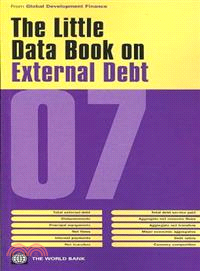
This new addition to the 'Little Data Book' titles presents at-a-glance tables for over 140 economies showing the most recent national data on key indicators of information and communications technolo
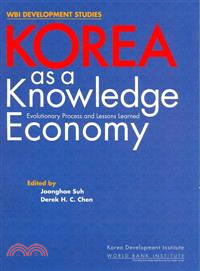
From the Korea Development Institute and the World Bank Institute comes this follow up report to 2000's Korea and the Knowledge-Based Economy: Making the Transition (2000). This report evaluates curre
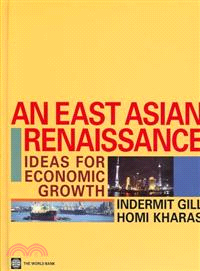
This book explore the future of East Asia's middle-income countries. Without the advantages of low wages or high skills, and with limited natural resources, East Asian economies are following a new pa
The World Bank Group is a vital source of financial and technical assistance to developing countries around the world. Its focus is on helping the poorest people in the poorest countries by using its
'Environmental Priorities and Poverty Reduction: A Country Environmental Analysis for Colombia' proposes cost-effective policy and technical interventions aimed at abating the cost of environmental de
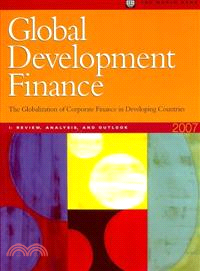
Produced by the staff of the International Bank for Reconstruction and Development/The World Bank, this two-volume annual publication reviews global financial conditions facing developing countries. T
'The Little Book on External Debt' provides a quick reference for users interested in external debt stocks and flows, major economic aggregates, key debt ratios, and the currency composition of long-t
Noncommunicable diseases (NCDs) are by far the major cause of death in lower-middle, upper-middle, and high-income countries; by 2015, they will also be the leading cause of death in low-income countr
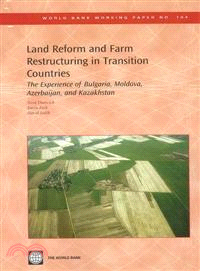
In the past fifteen years, most countries of Central and Eastern Europe and the Commonwealth of Independent States have shifted from predominantly collective to more individualized agriculture. These
Haiti is a resilient society whose rural communities in particular have developed coping mechanisms in response to a long history of underdevelopment and political instability. The country's religious
The striking upsurge in population growth rates in developing countries at the close of World War II gained force during the next decade. From the 1950s to the 1970s, scholars and advocacy groups publ
Prosperity in the world today depends on societies' nurturing of young children. Quality care (stimulation, health, and nutrition) during ages 0 - 5 has a decisive and long-lasting impact on a person'
Great progress has been made in recent years in securing better access and financial protection against the cost of illness through collective financing of health care. Managing scarce resources effec
International migration has become acentral element of international relations and global integration due to its rapidly increasing economic, social, and cultural impact in both source and destination
Apparently geared towards audiences concerned with reforming budgeting and budgeting institutions in the developing world, this work consists of both a primer on budgeting and budgetary institutions a
'Global Development Finance' (GDF), is the World Bank's annual review of recent trends in and prospects for financial flows to developing countries. It is an indispensable resource for governments, ec
This annual conference is a global gathering of the world's leading scholars and practitioners. Among the attendees are participants from developing countries, think tanks, NGOs, and international ins
Government guarantees can help persuade private investors to finance valuable new infrastructure. But because their costs are hard to estimate and usually do not show up in the government's accounts,
Most aspects of South Africa's investment climate—the location-specific factors that shape opportunities and incentives for firms to invest productively, create jobs, and grow—are favorable. The major
Half of small businesses in Kenya are owned and operated by women, but Kenya's women suffer significant inequities. This report by the World Bank asserts that business women in Kenya should be encoura
Malnutrition—especially, the stunting of children under five—is arguably Ecuador's biggest development challenge. Like other Andean countries (such as Peru and Bolivia), Ecuador has a persistently hig
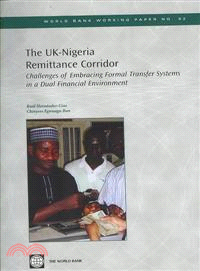
This study provides an overview of remittance flows from the United Kingdom to Nigeria and presents a series of specific recommendations to facilitate the transfer of remittance flows through financia
International migration has become acentral element of international relations and global integration due to its rapidly increasing economic, social, and cultural impact in both source and destination
'Recruiting, Retaining and Retraining Secondary School Teachers and Principals in Sub-Saharan Africa' is based on country studies in Ethiopia, Ghana, Guinea, Madagascar, Tanzania and Uganda and an ext
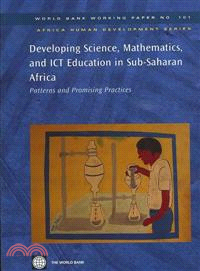
'Developing Science, Mathematics and ICT in Secondary Education' is based on country studies from ten Sub-Saharan African countries: Botswana, Burkina Faso, Ghana, Namibia, Nigeria, Senegal, South Afr
'Structured Finance in Latin America' explores how structured finance mechanisms can channel pension savings to support projects in underserved sectors, deepen capital markets, and contribute to inves
The faith and development nexus is both a promising new focus for secular development agencies and a historic reality: for centuries, world faiths and individuals inspired by their faith have played m
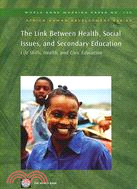
'The Link between Health, Social Issues and Secondary Education' is based on country studies in six Sub-Saharan African countries—Eritrea, Mali, Namibia, Senegal, South Africa and Tanzania, and a lite
Based on comprehensive empirical studies, the paper identifies key reforms and defines strategies to enhance the competitiveness of the cotton sector in West and Central Africa. Lessons learned from t
This publication from the World Bank demonstrates that by 2025, many countries in Eastern Europe and the former Soviet Union--which are still transitioning economically and politically-- will have amo
India's relatively low HIV prevalence rate often raises the question of whether it is in corporate sector interest to allocate resources to combat HIV and AIDS. The five case studies in this report fe
Presented by the International Bank for Reconstruction and Development/The World Bank and aimed at policy makers, this volume describes quality systems for private sector development, with a focus on
This report from the World Bank seeks to analyze the distributional effect of minimum wage policies in the developing world, particularly Latin America and the Caribbean, in order to provide guidance
This study addresses policy, social, and technical challenges facing aquaculture, provides orientations and recommendations for World Bank client countries. and makes suggestions about the Bank's role
The 2007 'Global Monitoring Report' on the Millennium Development Goals (MDGs) assesses the contributions of developing countries, developed countries, and international financial institutions toward
Over the past 20 years Nepal's financial sector has become deeper and the number and type of financial intermediaries have grown rapidly. Recent reforms have also made the banking sector more stable.
The fifth ABCDE-Europe was held in Paris, France, on May 15-16, 2003. The conference was co-organized by France's Agence francaise de developpement (AfD), the Conseil d'Analyse Economique (CAE), and t
High-quality public debt management plays a critical role in reducing the vulnerability of developing countries to financial crises. With sound risk and cash management, effective coordination with fi
Domestic government debt markets play a critical role in managing public debt effectively and reducing the vulnerability of developing countries to financial crises. Many aspects of debt markets—money
The need to promote increased trade, prevent the spread of HIV/AIDS, and ensure adequate water resources are some of the development challenges generating interest in increased regional and sub-region