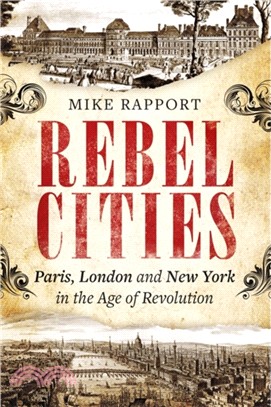
London, Paris and New York in the eighteenth century, as today, were places where political authority, commerce and money, art and intellectual life intersected. They straddled an Atlantic world where ships powered by nothing more than wind, currents and human muscle criss-crossed the sea, carrying with them goods, ideas and above all people: men and women, bewigged aristocrats and lawyers, rough-handed craftworkers, quill-wielding bluestockings and doughty fishwives. But the cities were also home to dangerous criminals, corrupt politiciansA- - and slaves. Rebel Cities explores the stormy debate about the nature of cities in the eighteenth and nineteenth centuries: were they places of enlightenment, sparkling wells of progress and civilisation, or were they dens of vice, degeneracy and disorder? Against a backdrop of accelerating urban expansion and revolution in both Europe and North America, revolutionary burghers of these extraordinary cities expended ink, paint, breath and, someti