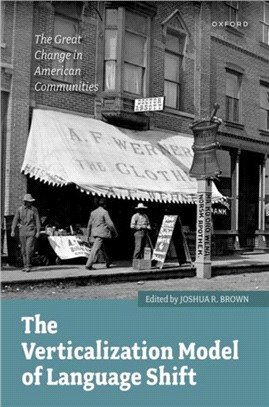
This book introduces a new and still emerging theoretical framework for understanding language shift and uses this approach to explore a range of minority language communities in the United States. To date, approaches to language shift have typically relied on explaining the process through descriptive sociolinguistic models, i.e., how the community first becomes bilingual in both the majority and minority languages and then eventually shifts entirely to the majority language. The contributions in this volume instead attribute shift to a change from local control of tightly interconnected 'horizontal' institutions within a community to more external or 'vertical' control of those increasingly autonomous institutions outside the community; in short, language shift is driven by specific changes in community structure. In addition, unlike previous approaches to language shift, the one proposed here is generalizable. Following an introduction to the theory, the main five chapters in the bo
若需訂購本書,請電洽客服 02-25006600[分機130、131]。