Schafer (Max Planck Institute for the History of Science, Germany) presents 14 articles exploring issues of technological knowledge circulation and transmission in Chinese history. The papers have bee
To understand modern science, it is essential to recognize that many of the most fundamental scientific principles are drawn from the knowledge of ancient civilizations. Taking a global yet comprehens
To understand modern science, it is essential to recognize that many of the most fundamental scientific principles are drawn from the knowledge of ancient civilizations. Taking a global yet comprehens
Whether an individual doctoral study or a large-scale multidisciplinary project, researchers working across cultures face particular challenges around power, identity, and voice, as they encounter eth
This book argues that poetry is compatible with systematic knowledge including science, and indeed inherent in it; it also discusses particular poems that engage with such knowledge, including those o
Cultural accounts of scientific ideas and practices have increasingly come to be welcomed as a corrective to previous—and still widely held—theories of scientific knowledge and practices as universal.
Cultural accounts of scientific ideas and practices have increasingly come to be welcomed as a corrective to previous—and still widely held—theories of scientific knowledge and practices as universal.
In the debut title in this new series, Peters and Besley (both with the U. of Illinois at Urbana-Champaign), offer ten original and reprinted chapters addressing educational policy from poststructural
Put together to honour one of the most influential philosophers in recent times, Mrinal Miri, this book brings together articles on philosophy, politics, literature and society, and updates the status
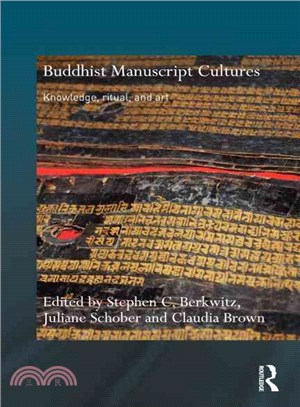
Buddhist Manuscript Cultures explores how religious and cultural practices in premodern Asia were shaped by literary and artistic traditions as well as by Buddhist material culture. This study of Budd
Buddhist Manuscript Cultures explores how religious and cultural practices in premodern Asia were shaped by literary and artistic traditions as well as by Buddhist material culture. This study of Budd
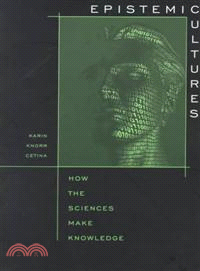
How does science create knowledge? Epistemic cultures, shaped by affinity, necessity, and historical coincidence, determine how we know what we know. In this book, Karin Knorr Cetina compares two of t
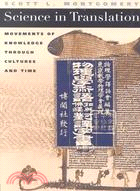
In this innovative work, Scott L. Montgomery explores the diverse roles that translation has played in the development of science from antiquity to the present—from the Arabic translations of Greek an
We live in an age of lists, from magazine features to online clickbait. This book situates the list in a long tradition, asking key questions about the list as a cultural and communicative form. What,
Issues of representation affect every aspect of scientific activity, from the encoding, display, analysis, and presentation of data to the communication of scientific concepts and information to stud