The magical qualities of stained glass have an enduring appeal, but church windows tend to be ignored as a form of creative and artistic expression. How to Look at Stained Glass is a fresh, unstuffy g
This volume offers an interdisciplinary study of Reformed sanctification and human development, providing the foundation for a constructive account of Christian moral formation that is attentive both
By bringing together the insights of ecclesial ethics, an approach that emphasizes the distinctive nature of the church as the community that forms its mind and character after its reading of Scriptur
Neil Messer brings together a range of theoretical and practical questions raised by current research on the human brain: questions about both the 'ethics of neuroscience' and the 'neuroscience of eth
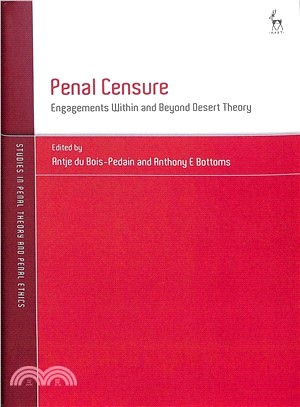
This exploration of penal censure is inspired by the 40th anniversary of the publication of Andreas von Hirsch's Doing Justice, which opened up a fresh set of issues in theorisation about punishment t
The Journal of the Society of Christian Ethics continues to be an essential resource for students and faculty pursuing the latest developments in Christian and religious ethics, publishing refereed sc

This open access book discusses individual, collective, and institutional responsibilities with regard to vaccination from the perspective of philosophy and public health ethics. It addresses the issu
Recent research in the humanities and social sciences suggests that individuals who understand themselves as belonging to something greater than the self—a family, community, or religious or spir
Many ethicists either accept the reflective equilibrium method or think that anything goes in ethical theorizing as long as the results are plausible. The aim of this book is to advance methodological
Russian Nobel prize–winner Aleksandr Solzhenitsyn (1918–2008) is widely acknowledged as one of the most important figures—and perhaps the most important writer—of the last century. To celebrate the ce
This volume considers the ethics of policing and imprisonment, focusing particularly on mass incarceration and police shootings in the United States. The contributors consider the ways in which non-id
When deciding what to do, is it best to treat one’s own interests as more important than the interests of others, others’ interests as more important than one’s own, or one’s own and others’ interests
Derek Parfit’s On What Matters is widely recognized as elegant, profound, and destined to change the landscape of moral philosophy. In Volume One, Parfit argues that the distinct—indeed, powerfully co
This volume frames the question of responsibility as a problem of agency in relation to the systems and structures of globalization. According to Ricoeur responsibility is a “shattered concept” when c
When many people are involved in an activity, it is often difficult, if not impossible, to pinpoint who is morally responsible for what, a phenomenon known as the ‘problem of many hands.’ This term is
Today it is widely recognized that we face urgent and serious environmental problems and we know much about them, yet we do very little. What explains this lack of motivation and change? Why is it so
The concept of evil is one of the most powerful in our moral vocabulary, and is commonly used today in both religious and secular spheres to condemn ideas, people, their actions, and much else besides
This book examines the links between civil society, religion and politics in the Middle East and North Africa region. The chapters in the volume explore the role of religion in shaping and changing th
Why save endangered species without clear aesthetic, economic, or ecosystemic value? This book takes on this challenging question through an account of the intrinsic goods of species. Ian A. Smith arg
This volume responds to the growing interest in finding explanations for why moral claims may lose their validity based on what they ask of their addressees. Two main ideas relate to that question: th
Autumn Alcott Ridenour offers a Christian theological discussion on the meaning of aging toward death with purpose, identity, and communal significance. Drawing from both explicit claims and construct
Are there objective moral truths (things that are morally right or wrong independently of what anybody thinks about them)? To answer this question more and more scholars have recently begun to appeal
The latest volume in this prestigious series brings together twenty-five global scholars to reflect on the role of Catholic ethicists in the context of their particular, local churches and in light of
Michael Richard Laffin demonstrates the promise of Martin Luther's thought for contemporary political theology by showing how Luther has been over-determined in standard genealogies of modernity whi
Wild animals form an integral component of the human leisure experience. They are a significant part of the leisure industry and are economically valuable entities. However, as sentient beings animals
The aim of Ethics and Self-Cultivation is to establish and explore new "cultivation of the self" strand within contemporary moral philosophy. Although the revival of virtue ethics has helped reintrodu
Domestic animals are an integral component of human leisure experience and can enhance the physical, social and mental wellbeing of humans. The interplay of human and animal experiences of justice, we
This book offers a new account of what it is to act for a normative reason. The first part of the book introduces some popular ideas and problems concerning causal and dispositional approaches of acti
The Journal of the Society of Christian Ethics continues to be an essential resource for students and faculty pursuing the latest developments in Christian and religious ethics, publishing refereed sc