Editors McIntosh, Pelaez-Morales, and Silva present students, academics, researchers, and professionals working in a wide variety of contexts with a collection of academic papers and scholarly article
McKinney presents the book she wished she had as a writing center tutor and graduate student who was trying to become part of the composition and rhetoric community but was not sure how to go about it
Rhetoric and writing scholars articulate a way of moving a conversation about the Israel-Palestine conflict forward while avoiding the discursive pitfalls hampering the peace process. The topics inclu
Poetry. Winner of the New Measure Poetry Prize. "If ostranenie-to make strange-is the mandate of contemporary poetry, Emily Carr has achieved this both brilliantly and beautifully. Kaleidoscopic in it
At times Winterowd is playful, and at other times he's the mordantly cynical critic---of the academy, of academicians, and of society in general. His attitudes are leavened by wit, and his insights a
Genre: An Introduction to History, Theory, Research, and Pedagogy provides a critical overview of the rich body of scholarship that has informed a "genre turn" in Rhetoric and Composition, including
Framed by historic developmentsufrom the Open Admissions movement of the 1960's and 1970's to the attacks on remediation that intensified in the 1990's and beyonduBasic Writing traces the arc of these
For academics, students, and educators, Smudde (communication, Illinois State U.) assembles ten essays that use Kenneth Burke's 1955 essay "Linguistic Approach to Problems of Education" (included in t
Fiction. THE WABASH TRILOGY includes three new novels by William J. Palmer: The Wabash Baseball Blues, The Redneck Mafia, and Civic Theater. Each novel shows Palmer at his most poignant and hilarious
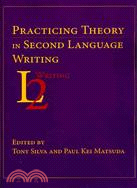
Theory has been used widely in the field of second language writing, Second language writing specialists---teachers, researchers, and administrators---have yet to have an open and sustained conversat
Literary Nonfiction. Memoir. East Asia Studies. Translated from the French by Daniel Kane. In what was by all appearances a relatively short life, Amedee Baillot de Guerville was by turns an instructo
In this student-centered introduction to composition studies, Byard (English, Northeastern Illinois University) integrates bibliographic instruction and information literacy into the curriculum for an
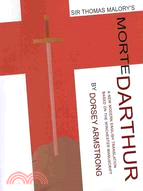
Fiction. Folk Tales. Medieval Studies. Dorsey Armstrong provides a new, Modern English translation of the MORTE DARTHUR that portrays the holistic and comprehensive unity of the text as a whole, as su
Rhetoric scholars are increasingly venturing into non-Western cultural territory that developed independently of classical Greek and Roman models. Lipson (Syracuse U.) and Binkley (PhD, rhetoric), co-
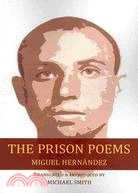
Poetry. Translated from the Spanish by Michael Smith. THE PRISON POEMS is the first complete translation into English of Miguel Hernandez's Cancionero y romancero de ausencias, a classic of twentieth
A lady trader in the Transvaal presents the South African adventures of Sarah Heckford, a once famous but now forgotten Anglo-Irish gentlewoman. After treking to the Transvaal in 1878, this intrepid w
The veteran of many a community literacy project and many a study about the phenomenon, Long (composition, Eastern Washington U.) examines the motivations, content and process of "going public" with o
Newstok (English, Gustavus Adolphus College) has gathered and annotated all of Burke's Shakespeare criticism, including previously unpublished notes and lectures. Burke's interpretations of Shakespear
Poetry. "Racy, playful, and ultimately rather ominous, these intricate poems gather up centuries in a single sweep and make it all shockingly pop. There is a brooding intelligence here, radiant with f
In this absorbing and very personal journey, Kleine (rhetoric and writing, U. of Arkansas, Little Rock) seeks Brunetto Latini, a proponent of Ciceronian rhetoric. Although Kleine finds Latini singular
Literary Nonfiction. Education. ESL. Language Arts & Disciplines. Edited by Paul Kei Matsuda, Christina Ortmeier-Hooper, and Xiaoye You. THE POLITICS OF SECOND LANGUAGE WRITING: IN SEARCH OF THE P
The "Writing Across the Curriculum" (WAC) movement started in the early 1970s and gathered steam as it became apparent that making every subject a writing subject worked in the classroom. Here pioneer