商品簡介
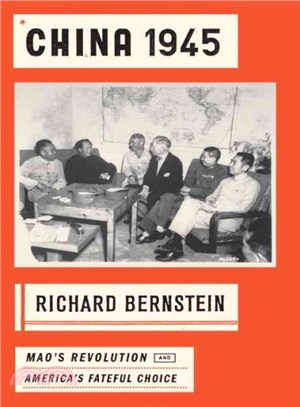
A riveting account of a watershed moment in history: when America's struggles with the despotic Chiang Kai-shek and the manipulative, ascendant Mao Zedong altered the course of East-West relations.
As 1945 opened, America was on surprisingly congenial terms with Mao and his Communist rebels. But by year's end Communist diplomacy had all but frozen and America was resigned to unqualified support for China's Allied leader, General Chiang Kai-Shek, despite growing certainty that Mao was China's heir apparent-a political allegiance whose consequences would echo down the subsequent decades, most violently in the form of the Korean and Vietnam wars. What happened? Richard Bernstein brilliantly analyzes the many components of that year's sea change, from ideological infighting among U.S. diplomats, military leaders, and opinion makers, to Mao's opportunistic presentations of identity and ambition, to China's status as the crucible of a new world order, in which Soviet influence and intention were increasingly clearly manifest. Bernstein challenges familiar assumptions about the origins of modern Sino-American paradigms and meaningfully considers whether things could have turned out differently.
作者簡介
RICHARD BERNSTEIN has been a reporter, culture critic, and commentator for more than thirty years. He was a foreign correspondent in Asia and Europe for Time magazine and The New York Times, and was the first bureau chief in China for Time. He is the author of many books on Chinese and Asian themes, among them: The Coming Conflict with China and Ultimate Journey, the latter of which was a New York Times Best Book of the Year. He is also the author of Out of the Blue: From Jihad to Ground Zero, which was named byThe Boston Globe as one of the seven best books of 2002.