商品簡介
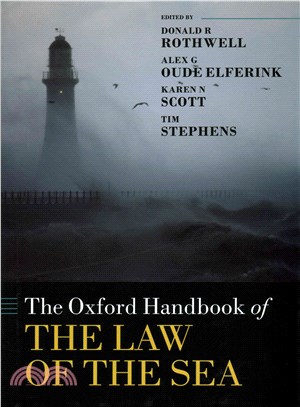
Human activities have taken place in the world's oceans and seas for most of human history. With such a vast number of ways in which the oceans can be used for trade, exploited for natural resources and fishing, as well as concerns over maritime security, the legal systems regulating the rights and responsibilities of nations in their use of the world's oceans have long been a crucial part of international law. The United Nations Convention on the Law of the Sea comprehensively defined the parameters of the law of the sea in 1982, and since the Convention was concluded it has seen considerable development. ThisOxford Handbook provides a comprehensive and original analysis of its current debates and controversies, both theoretical and practical. Written by over forty expert and interdisciplinary contributors, the Handbook sets out how the law of the sea has developed, and the challenges it is currently facing.
The Handbook consists of forty chapters divided into six parts. First, it explains the origins and evolution of the law of the sea, with a particular focus upon the role of key publicists such as Hugo Grotius and John Selden, the gradual development of state practice, and the creation of the 1982 UN Convention. It then reviews the components which comprise the maritime domain, assessing their definition, assertion, and recognition. It also analyses the ways in which coastal states or the international community can assert control over areas of the sea, and the management and regulation of each of the maritime zones. This includes investigating the development of the mechanisms for maritime boundary delimitation, and the decisions of the International Tribunal for the Law of the Sea. The Handbook also discusses the actors and intuitions that impact on the law of the sea, considering their particular rights and interests, in particular those of state actors and the principle law of the sea institutions. Then it focuses on operational issues, investigating longstanding matters of resource management and the integrated oceans framework. This includes a discussion and assessment of the broad and increasingly influential integrated oceans management governance framework that interacts with the traditional law of the sea. It considers six distinctive regions that have been pivotal to the development of the law of the sea, before finally providing a detailed analysis of the critical contemporary issues facing the law of the sea. These include threatened species, climate change, bioprospecting, and piracy. TheHandbook will be an invaluable and thought-provoking resource for scholars, students, and practitioners of the law of the sea.
作者簡介
Donald R. Rothwell, Professor of International Law, Australian National University,Alex G. Oude Elferink,Professor of International Law, Utrecht University,Karen N. Scott, Professor of Law, University of Canterbury,Tim Stephens,Associate Professor of Law, University of Sydney
Donald R. Rothwell is Professor of International Law at the ANU College of Law, Australian National University, Australia where he has taught since 2006, and was previously Challis Professor of International Law at the University of Sydney (2004-2006). His research areas include the law of the sea, the law of the polar regions, international security law, and international law in Australia. He is author, co-author and editor of 16 books.
Alex G. Oude Elferink is Deputy Director of the Netherlands Institute for the Law of the Sea at the School of Law, Utrecht University, The Netherlands. His research interests include the law of the sea, the law of the polar regions, and the relationship between international law and international relations.
Karen N. Scott is a Professor of Law at the University of Canterbury, Christchurch, New Zealand. Her research interests include Antarctic law and policy, the law of the sea and international environmental law. She is the editor of theNew Zealand Yearbook of International Law and a member of the Advisory Board to Gateway Antarctica at the University of Canterbury.
Tim Stephens is an Associate Professor in the Faculty of Law, University of Sydney, Australia and Co-Director of the Sydney Centre for International Law. His research interests include the law of the sea, international environmental law, and international dispute settlement. He is the Co-Editor of the Asia Pacific Journal of Environmental Law.