商品簡介
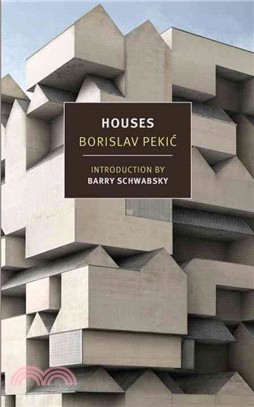
Building can be seen as a master metaphor for modernity, which some great irresistible force, be it fascism or communism or capitalism, is always busy building anew, andHouses is a book about a man, Arseniev Negoyan, who has devoted his life and his dreams to building.
Bon vivant, Francophile, visionary, Negoyan spent the first half of his life building houses he loved and even gave names to—Juliana, Christina, Agatha—making his hometown of Belgrade into a modern city to be proud of. The second half of his life, after World War II and the Nazi occupation, he has spent in one of those houses, being looked after by his wife and a nurse, in hiding. Now, on the last day of his life, Negoyan has decided to go out at last to see what he has wrought.
Negoyan is one of the great characters in modern fiction, a charming monster of selfishness and self-delusion. And for all his failings, his life poses a question for the rest of us: Where in the modern world is there a home except in illusion?
作者簡介
Borislav Pekic (1930–1992) was a political activist and writer. In 1948 he was accused of organizing a student conspiracy against the state of Yugoslavia and sentenced to fifteen years of hard labor. He was pardoned in 1954. Ten years later, he won a major Yugoslav literary prize, the NIN Award, for his first novel, The Time of Miracles. In 1971, Pekic immigrated to London, where he continued to write novels, although Yugoslav authorities prevented them from being published in his home country for several years. He also wrote more than twenty original screenplays, adapting some of his novels to the screen, includingThe Time of Miracles. Among his many works are the novel How to Quiet a Vampire, the playThe Generals, and his memoir of postwar life under Communist rule Godine koje su pojeli skakavci (The Year the Locusts Have Devoured).
Bernard Johnson (1933–2003) was affiliated with the Language Centre at the London School of Economics for many years. In 1970 he edited and translated the first anthology of modern Yugoslav literature, and throughout his career he distinguished himself as one of the most active translators of Serbo-Croatian poetry and prose working in English. He also translatedThe Use of Man by Aleksandar Ti?ma for NYRB Classics.