商品簡介
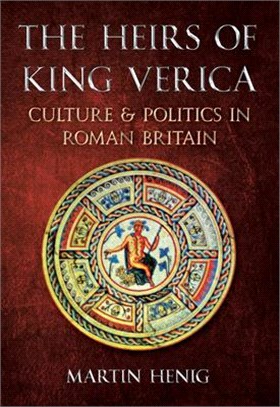
Britain is traditionally considered to have been conquered by the Romans in AD43. In fact the intervention took place because an important faction of the Atrebates tribe under King Verica persuaded the Emperor Claudius to intervene against other Britons who had invaded its territory. Central southern Britain was liberated by a forced landing in Chichester harbour and thereafter remained largely free from the influence of the Roman army. It became Roman under the patronage of a powerful high king, Tiberius Claudius Togidubnus. Cultural and artistic life flourished, melding Celtic and Roman features into a brilliant new civilization which reached its apogee in the fourth century, when the former protectorate became Britannia Prima with its capital at Cirencester. After the early fifth century, the cessation of coinage made the financing of public buildings, villas and associated works of art impossible, but something survived of Roman Britain in the distinctive British Latin, the insular version of Christianity and the style of minor works of art. In a real sense Britannia Prima was the predecessor of Alfred's Wessex. This revolutionary interpretation of British life in the first millennium AD, beginning with Verica's flight and ending with Alfred and Bishop Asser, is presented as the Roman Britons (well versed in Ovid and other Roman writers) would doubtless have seen it.
作者簡介
Martin Henig is a Visiting Professor at the Institute of Archaeology, University College, London and a former Fellow of Wolfson College, Oxford. He is currently engaged with friends in completing a definitive catalogue of all the Roman sculpture from London and south-eastern England as well as a major catalogue of Roman cameos. He is the author of standard works on Roman art and religion in Britain. From 1985 to 2007 he was Honorary Editor of the British Archaeological Association. His wide interests are reflected in the contents of the Festschrift presented to him on his 65th birthday, Pagans and Christians - from Antiquity to the Middle Ages (Oxford 2007) . Recently ordained, he is now serving as a deacon in the West Oxford benefice which includes the early ecclesiastical site of Binsey, which is the subject of a collection of essays of which he is co-editor, also published by Amberley.