商品簡介
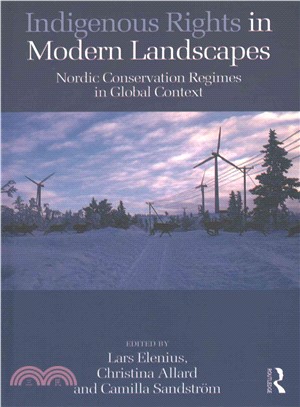
This book examines the diverse use of indigenous customary rights in modern landscapes from a multidisciplinary perspective. Divided into two parts, the first deals explicitly with Sámi customary rights in relation to nature conservation in the Nordic countries and Russia from a legal and historical perspective. The authors investigate how longstanding Sámi customary territorial rights have been reassessed in the context of new kinds of legislation regarding indigenous people. They also look at the ideas behind the historical models of nature conservation. The second part deals with the ideas and implementation of new kinds of postcolonial models of nature conservation. The case of the Sámi is compared with other indigenous people internationally with cases from Australia, New Zealand, Canada and India. The work investigates how the governance of protected areas has been influenced by the principles of equality and positive discrimination, and how it has affected the possibilities of establishing adaptive co-management arrangements for specific areas. How the legal situation of Indigenous peoples has been recognised in an international context is also investigated. The volume provides a multidisciplinary analyse of how the customary livelihood of Indigenous people has adapted to modern industrialised landscapes and also how postcolonial approaches have contributed to global changes of indigenous rights and nature conservation models.
作者簡介
Lars Elenius is professor of History and Education at UmeA¥ University and Associate Professor at LuleA¥ University of Technology, Sweden. His specialist areas of interest are on national minorities and indigenous people in northern Europe. His research interests generally are on history of education, indigenous history, historical culture, minoritypolicy, ethnopolicy, nationalism, regionalism, history of Northern Europe. He has written widely on these and related topics. Camilla SandstrA?m is senior lecturer and associate professor at the Department of Political Science, UmeA¥ University, Sweden. She has a special interest in institutional aspects of natural resource governance and management, including how collaborative governance such as co-management and public private partnerships can be used to handle conflicts and trade-offs between different interests. She is the leader of an interdisciplinary team involved in research on sustainable rural development with a specific emphasis on natural resource management such as protected areas, forests, fish and wildlife. Christina Allard is senior lecturer in Law at the Department of Social Sciences, LuleA¥ University of Technology, Sweden, and associate professor at the Faculty of Law, The Arctic University of Norway. Her research interests focus on natural resources use and environmental protection with special emphasis on indigenous peoplea€?s territorial rights as well as comparative legal aspects. She is the leader of the Nordic research network for SA!mi and Indigenous peoplea€?s law, NORSIL (www.uit.no/jurfak/norsil) and has a strong publication record on research related to indigenous rights.