商品簡介
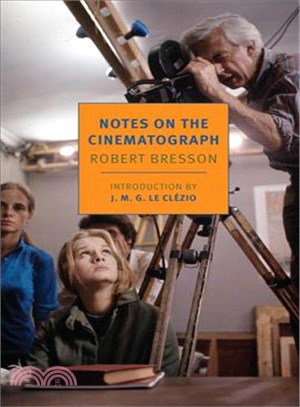
A key influence on the French New Wave and the director of such iconic works asPickpocket and A Man Escaped, Robert Bresson is one of the central figures of French cinema.Notes on the Cinematograph is not only his definitive treatise on film—its inherent peculiarity and potential—but an ascetic meditation on how art transcends, and is transformed by, the senses.
Bresson upends inherited truths with empirical ones, calling for film to divest itself of the trappings of theater in order to come into its own as an art form. While theater is capable of simulation, film can capture immanent being. Therefore, he argues, the two forms are innately at odds: “No marriage of theater and cinematography without both being exterminated.”
To this end, Bresson rechristens his actors “models” and conducts them through grueling shoots where they repeat their lines and movements until he deems them vacant of actorly intention and charged, instead, with inscrutability: “A model. Enclosed in his mysterious appearance. He has brought home to him all of him that was outside. He is there, behind that forehead, those cheeks.”
作者簡介
Robert Bresson (1901–1999) was a renowned French film director, whose work was characterized by his minimalist style and interest in actor (or “character”) movement. He directed thirteen films over forty years, includingAu hasard Balthazar (1966), which is considered his masterpiece. NYRB is also publishingBresson on Bresson: Interviews, 1943–1983 in Fall 2016.
Jonathan Griffin (1906–1990) was a translator, poet, and diplomat, who served as the director of BBC European Intelligence during World War II. In addition to translating works by Robert Bresson, he translated Jean Giono novels, Charles de Gaulle’s memoirs, and art criticism by Rene Huyghe. A collection of Griffin’s poetry, In Earthlight, was published in 1995 by Menard Press.