商品簡介
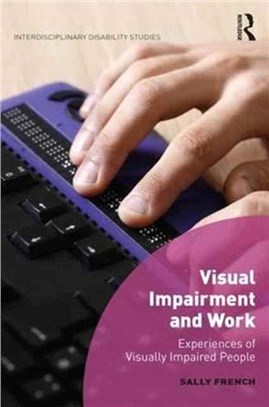
This book traces the development of paid work for visually impaired people in the UK from the 18th century to the present day. It gives a voice to visually impaired people to talk about their working lives and documents the history of employment from their experience, an approach which is severely lacking in the current literature about visual impairment and employment. By analysing fifty in-depth face-to-face interviews with visually impaired people talking about their working lives (featuring those who have worked in traditional jobs such as telephony, physiotherapy and piano tuning, to those who have pursued more unusual occupations and professions), and grouping them according to time period and framed by documentary, historical research, these stories can be situated in their broader political, economic, ideological and cultural contexts. The themes that emerge will help to inform present day policy and practice within a context of high unemployment amongst visually impaired people of working age. It is part of a growing literature which gives voice to disabled people about their own lives and which adds to the growing academic discipline of disability studies and the empowerment of disabled people.
作者簡介
Sally French has worked in higher education since 1978 and has worked at the University of East London, The Open University (as a tutor and writing courses) The University of Winchester and Hatfield University all in the UK. She is the editor of Physiotherapy: a psychosocial approach (3rd ed.), Elsevier, Oxford, 2004 (with Sim J).; author of Understanding Disability: A guide for health professionals. Butterworth-Heinemann, Oxford, 2008 (with Swain J.); editor of Disability on Equal Terms: Understanding and valuing difference in health and social care, London, Sage, 2008 (with Swain J.); author of Disabled People, Health and Social Care: a social model for inter-agency working. Houndsmill, Palgrave, 2011 (with Swain J); editor of Disabling Barriers - Enabling Environments. (3rd ed.) Sage, London, 2013 (with Swain J., Barnes C. and Thomas C.)