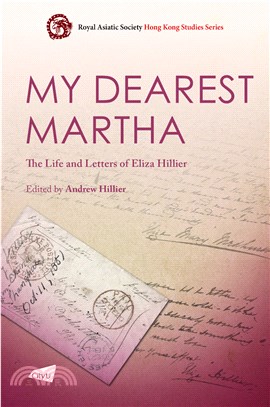
My grandfather, Harold Hillier, was a keen and meticulous genealogist. Inheriting a large quantity of papers, he compiled a family tree stretching back to the eighteenth century as well as a family chronicle. Focusing on the careers of the more successful men, he had little interest in examining and describing their private lives, let alone those of the women. He did, however, have transcribed the letters written by his grandmother, Eliza Hillier (née Medhurst), to her sister Martha, between 1846 and 1856. This was extremely fortunate, as they are now barely legible, many being written in a cross-hatched format used to reduce the cost of postage. Shortly before his death, these letters, together with a mass of other papers, were passed down to me and I was able to start working on them when I retired.
In my first book, Mediating Empire: An English Family in China, 1817–1927, I used the papers to examine the relationship between family and empire.1 Whilst this showed the important role played by women, I could not do justice to the wealth of information that was available about Eliza. The letters provide fascinating insights into her character and development in a colonial setting, not just as the wife of a British official and begetter of five surviving children by the time she was aged twenty-eight but as a complete personality in her own right. Unusual in some ways, her story is nonetheless one that was replicated across the British World. Yet, because such sources so often disappeared, it is a story seldom told. The chance survival of these letters, therefore, provides a rare opportunity to explore the life of a young woman in empire.
This could not have been done without my grandfather’s foresight, and although he might not have agreed with all that I say, he will have been delighted that the letters have found such a sympathetic publisher. By the end of a long-haul flight from Hong Kong to Denver, USA (during which she read through the initial proposal and transcribed letters), my editor, Abby Leigh Manthey, told me that she felt she was already on first-name terms with Eliza. Since then, despite COVID-19 and other crises, she and her team at the City University of Hong Kong Press have driven this project forward with imagination and skill. It is thanks to them that it has reached fruition and that, along with those who have generously allowed me to use their images, it is so lavishly illustrated. The letters were written at a time when photography was in its infancy, but with an engaging vanity, the Medhursts and Hilliers were quick to catch onto the new medium. Many can now be viewed on the “Historical Photographs of China” website,2 and Jamie Carstairs has kindly supplied digitised copies and helped me to resolve puzzles in relation to dates and locations. Mike Hillier, my cousin and careful custodian of the family albums, and my son, Edward, have also provided their photographic expertise. A more distant cousin, James M’Kenzie-Hall, a direct descendant of Martha, read through an earlier version of the book and made many useful suggestions, as well as providing photographs of Martha’s writing materials, which he had found squirrelled away amongst his late mother’s possessions. Another distant cousin, John Holliday, biographer of Revd Walter Medhurst, has provided much assistance since I started work on the family papers.
Introduction: An Epistolary Relationship
Part I Intimate Empire
1 Evangelical Families
2 Letter-writing and the British World
Part II The Letters
3 Marriage, 1846–1847
4 Early Motherhood, 1847–1851
5 To Shanghai and Back, August 1851–July 1852
6 Homeward Bound, 1852
7 England, 1852–1855
8 Return to Hong Kong, 1855–1856
9 At Home in Siam, 1856
10 Sorrow and Bereavement, 1856
Part III At Home in the Empire
11 Re-building Her Life
12 Bridging the Distance of Empire
無庫存之港版書籍,將需向海外調貨,平均作業時間約30個工作天,然不保證確定可調到貨,尚請見諒。
為了縮短等待時間,建議您將港書與一般繁體書籍分開下單,以獲得最快的取貨速度。
為了保護您的權益,「三民網路書店」提供會員七日商品鑑賞期(收到商品為起始日)。
若要辦理退貨,請在商品鑑賞期內寄回,且商品必須是全新狀態與完整包裝(商品、附件、發票、隨貨贈品等)否則恕不接受退貨。