'Nothing more lonely -' A selection of Basho's most magical haiku Introducing Little Black Classics: 80 books for Penguin's 80th birthday. Little Black Classics celebrate the huge range and diversity
In his perfectly crafted haiku poems, Basho described the natural world with great simplicity and delicacy of feeling. When he composed The Narrow Road to the Deep North he was a serious student of Ze
A tale of civic action among a town of mice teaches lessons about teamwork, initiative, good sportsmanship, and the importance of relationships between old and youngWhen Miss Flora visits the home of
In later life Basho turned to Zen Buddhism, and the travel sketched in this volume relfect his attempts to cast off earthly attachments and reach out to spiritual fulfillment. The sketches are written
Here is the most complete single-volume collection of the writings of one of the great luminaries of Asian literature. Basho (1644?1694)—who elevated the haiku to an art form of utter simplicity and i
Basho, one of the greatest of Japanese poets and the master of haiku, was also a Buddhist monk and a life-long traveller. His poems combine 'karumi', or lightness of touch, with the Zen ideal of onene
A beautiful translation of one of the most-loved classics of Japanese literature.Here is the most complete single-volume collection of the writings of one of the great luminaries of Asian literature.
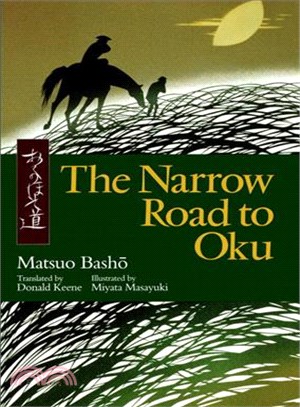
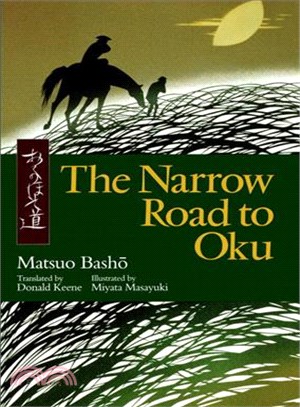
In the account which he named "The Narrow Road to Oku," Basho makes a journey lasting 150 days, in which he travels, on foot, a distance of 600 ri.This was three hundred years ago, when the average di
Vivid new translations of Basho's popular haiku, in a selected format ideal for newcomers as well as fans long familiar with the Japanese master.Basho, the famously bohemian traveler through seventeen
A collection of Basho's prose works include all of his longer prose pieces--the travel journals and "Saga Diary"--along with eighty short essays in haibun, prose in the spirit of haiku.
A collection of Basho's prose works include all of his longer prose pieces--the travel journals and "Saga Diary"--along with eighty short essays in haibun, prose in the spirit of haiku.
In the seventeenth century, the pilgrim-poet Basho undertook on foot a difficult and perilous journey to the remote northeastern provinces of Honshu, Japan's main island. Throughout the five-month jou
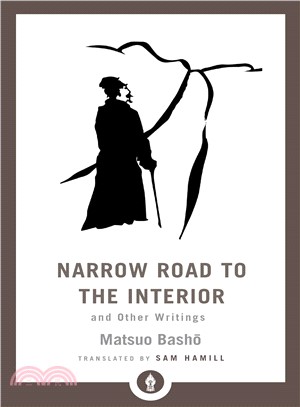
Matsuo Basho (1644-94) is considered Japan's greatest haiku poet. Narrow Road to the Interior (Oku no Hosomichi) is his masterpiece. Ostensibly a chronological account of the poet's five-month journey
In a thoughtful and perceptive introduction, Stryk sets the stage for an appreciation of what Basho’s poetry has to offer, sketching his life, his times, his spirit. For most of his life Basho was a r
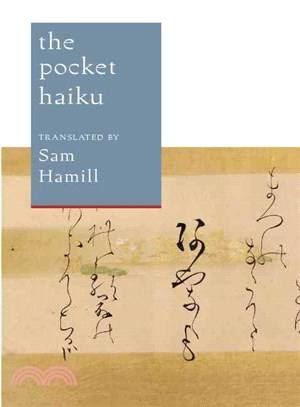
"Quintessential classical Japanese haiku--selected and translated by one of America's premier poet-translators--now available in a pocket edition. In this collection of haiku, translator Sam Hamill h
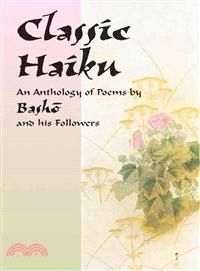
This volume features dozens of Basho's poems as well as works by his predecessors and ten of his disciples — Kikaku, Ransetsu, Joso, and Kyoroku among them. Intended principally for readers with no kn
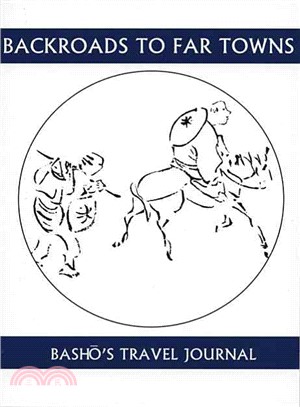
Basho (1644-1694), the most famous Haiku poet of Japan, recorded his many travels around Japan in his journals. Cid Corman's translation of Basho's most mature journal details the most arduous part o
In the account which he named The Narrow Road to Oku, Basho makes a journey lasting 150 days, in which he travels, on foot, a distance of 600 ri. This was three hundred years ago, when the average dis
This book has a dual purpose. The first is to present in a new English translation 255 representative hokku (or haiku) poems of Matsuo Basho (1644-94), the Japanese poet who is generally considered th
Basho stands today as Japans most renowned writer, and one of the most revered. Wherever Japanese literature, poetry or Zen are studied, his oeuvre carries weight. Every new student of haiku quickly
Basho stands today as Japans most renowned writer, and one of the most revered. Wherever Japanese literature, poetry or Zen are studied, his oeuvre carries weight. Every new student of haiku quickly
American readers have been fascinated since their exposure to Japanese culture late in the nineteenth century, with the brief Japanese poem called the hokku or haiku. The seventeen-syllable form is r