Few philosophers held greater fascination for Jacques Derrida than Martin Heidegger, and in this book we get an extended look at Derrida's first real encounters with him. Delivered over nine sessions
Theory and Practice is a series of nine lectures that Jacques Derrida delivered at the École Normale Supérieure in 1976 and 1977. The topic of “theory and practice” was assoc
In the first volume of this series, readers were given their first contact in English with 16 of Derrida's 28 essays on sexual difference, politics, architecture, negative theology, war, nationalism a
Psyche: Inventions of the Other brings together for the first time twenty-eight essays by Jacques Derrida that both advance his reflection on many issues, such as psychoanalysis, architecture, negativ
Some of Derrida's most challenging short pieces are in this collection which first appeared in 1987, and they include such classics as the title essay, "At This Very Moment in This Work Here I Am" and
H. C. for Life, That Is to Say . . . is Derrida's literary critical recollection of his lifelong friendship with Hélène Cixous. The main figure that informs Derrida's reading here is that of "taking
Derrida's approach to life was not at all pessimistic, he thought. Quite simply, it ended in death and that was all there was to it. He was just being realistic and logical. To his lifelong friend Hel
This book, written out of Derrida's long-standing friendship with Jean-Luc Nancy, examines the central place accorded to the sense of touch in the Western philosophical tradition.
Using the philosophy of Jean-Luc Nancy as an anchoring point, Jacques Derrida in this book conducts a profound review of the philosophy of the sense of touch, from Plato and Aristotle to Jean-Luc Nanc
Rogues, published in France under the title Voyous, comprises two major lectures that Derrida delivered in 2002 investigating the foundations of the sovereignty of the nation-state. The term "
Rogues, published in France under the title Voyous, comprises two major lectures that Derrida delivered in 2002 investigating the foundations of the sovereignty of the nation-state. The term "Etat vo
Derrida's first book-length work, The Problem of Genesis in Husserl's Philosophy, was originally written as a dissertation for his diplome d'etudes superieures in 1953 and 1954. Surveying Husserl's ma
In the 1970s, sections of the French government, particularly the Ministry of Education under RenT Haby, set out to limit the teaching of philosophy in French schools. Philosopher Derrida (one of the
This volume reflects Jacques Derrida's engagement in the late 1970s with French political debates on the teaching of philosophy and the reform of the French university system. He was a founding member
One of the world's most famous philosophers, Jacques Derrida, explores difficult questions in this important and engaging book. Is it still possible to uphold international hospitality and justice in
In this book, Derrida extends his work on Levinas in previously unexplored directions via a radical rereading of Totality and Infinity and other texts, including the lesser known talmudic readings. H
In Archive Fever, Jacques Derrida deftly guides us through an extended meditation on remembrance, religion, time, and technology--fruitfully occasioned by a deconstructive analysis of the notion of a
In the three essays that make up this stimulating and often startling book, Jacques Derrida argues against the notion that the basic ideas of psychoanalysis have been thoroughly worked through, argued
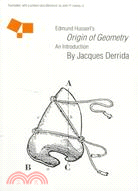
Edmund Husserl's Origin of Geometry": An Introduction (1962) is Jacques Derrida's earliest published work. In this commentary-interpretation of the famous appendix to Husserl's The Crisis of European
Limited Inc is a major work in the philosophy of language by the celebrated French thinker Jacques Derrida. The book's two essays, "Limited Inc" and "Signature Event Context
"The four essays in this volume constitute Derrida's most explicit and sustained reflection on the art work as pictorial artifact, a reflection partly by way of philosophical aesthetics (Kant, Heidegg
17 November 1979You were reading a somewhat retro loveletter, the last in history. But you have not yet received it. Yes, its lack or excess of address prepares it to fall into all hands: a post card
"In this densely imbricated volume Derrida pursues his devoted, relentless dismantling of the philosophical tradition, the tradition of Plato, Kant, Hegel, Nietzsche, Husserl, Heidegger--each dealt w
Positions is a collection of three interviews with Jacques Derrida that illuminate and make more accessible the complex concepts and terms treated extensively in such works as Writing and Difference a
First published in 1967, Writing and Difference, a collection of Jacques Derrida's essays written between 1959 and 1966, has become a landmark of contemporary French thought. In it we find Derrida at
What should we make of the return to the sacred evidenced by the new vitality of churches, sects, and religious beliefs in many parts of the world today? What are the boundaries between the essential