Montage has been hailed as one of the key structural principles of modernity, yet its importance to the history of modern thought about cities and their architecture has never been adequately explored
Learning from Las Vegas, published in 1972 by the architects Robert Venturi, Denise Scott Brown, and Steven Izenour, marks the turn in architectural theory from modern to post-modern. Martino Stierli
At the peak of the 1968/69 students' riots at American Universities, Robert Venturi and Denise Scott Brown, together with Steven Izenour, pursued their Design and Research Studio on the topic of Las V
Dubai was rapidly transformed by the discovery of oil in the nineteen-fifties. Within a brief period the number of inhabitants rose three hundred percent. The construction of the world’s tallest buil
For two decades, Swiss photographer Serge Fruehauf has documented fascinating architectural details cast in concrete. Yet his focus lies not only in the beauty of the built environment but also in the
At some point before publication, a book assumes its final form, the form in which it is experienced by its audience. Naturally, this audience is often oblivious to the many, sometimes complex, decisi
Since it was first published in 1972, Learning from Las Vegas has become a classic in the theory of architecture and one of the most influential architecture texts of the twentieth century. The treat
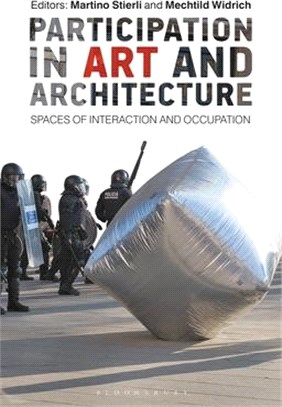
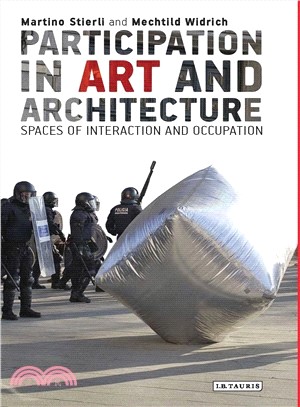
If participation has been an ideal in politics since ancient democracy, in art it became central only with the avant-gardes emerging from WWI and the Russian Revolution. Politics and aesthetics are st
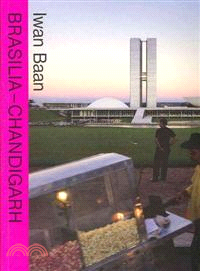
In 1960, Brasilia was celebrated as the realisation of an urban planning vision based on designs by Lucio Costa and Oscar Niemeyer. At the same time, the sectoral city of Chandigarh was rising accordi