In his 1997 work Guns, Germs and Steel, Jared Diamond marshals evidence from five continents and across 13,000 years of human history in an attempt to answer the question of why that history unfolded
Paul Kennedy owes a great deal to the editor who persuaded him to add a final chapter to this study of the factors that contributed to the rise and fall of European powers since the age of Spain's Phi
Hans Morgenthau’s Politics Among Nations is a classic of political science, built on the firm foundation of Morgenthau’s watertight reasoning skills.The central aim of reasoning is to construct a logi
With the ending of World War II in 1945, the Soviet Union and the United States began the decades-long confrontation known as the Cold War. American foreign policy focused on 'containment'-preventing
Published in 1776, when America was teetering on the brink of war with Britain, Common Sense galvanized the colonists and George Washington's army, influencing not only the course of the Revolutionary
Reasoning is the critical thinking skill concerned with the production of arguments: making them coherent, consistent, and well-supported; and responding to opposing positions where necessary. The Bet
What is the nature of our personal relationship with God? That's the core question of Fear and Trembling, published in 1843. If God asks us to do something we instinctively feel is unethical, must we
MacLeod's 1987 work, ground-breaking for the way it combines field research with theory, follows the lives of two groups of young men from a low-income housing project in the Boston area to show how p
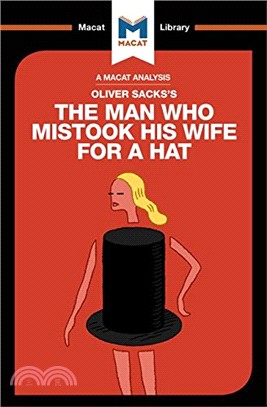
An instant bestseller, Sacks's 1985 book argues that, by connecting with their patients and pay attention to their stories, doctors can provide significantly more effective care.
C.S. Lewis's 1943 The Abolition of Man is subtitled 'Reflections on Education With Special Reference to the Teaching of English in the Upper Forms of Schools.'
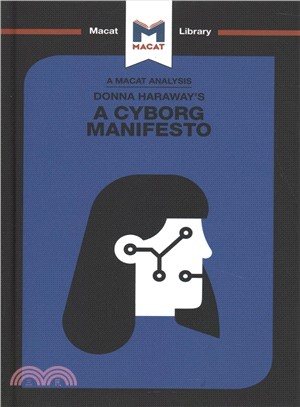
Haraway’s ‘Cyborg Manifesto’ is a key postmodern text and is widely taught in many disciplines as one of the first texts to embrace technology from a leftist and feminist perspective using the metapho
Haraway’s ‘Cyborg Manifesto’ is a key postmodern text and is widely taught in many disciplines as one of the first texts to embrace technology from a leftist and feminist perspective using the metapho
On Religion is a major text for the development of modern religious thought in the West and its author, German theologian Friedrich Schleiermacher, is remembered as the Father of Modern Protestant The
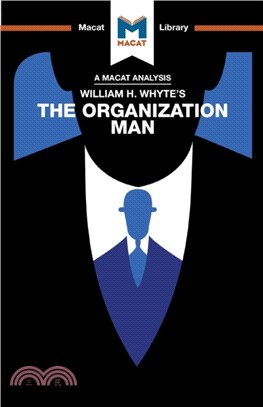
William Whyte’s core idea in The Organization Man is that the Protestant Ethic that characterized financial and personal success in American history had been replaced in modern times by the Social Eth
Michel Foucault’s 1969 essay “What is an Author?” sidesteps the stormy arguments surrounding “intentional fallacy” and the “death of the author,” offering an entirely different way of looking at texts
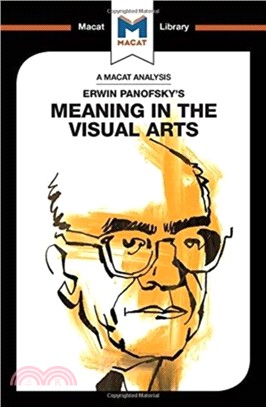
Erwin Panofsky’s Meaning in the Visual Arts is considered a key work in art history. Its ideas have provoked widespread debate, and although it was first published more than sixty years ago, it contin
The Sociological Imagination provoked hostile reaction when it appeared for its hard-hitting attack on how sociology was practiced, and on several leading sociologists.
Few people can claim to have had minds as fertile and creative as the French philosopher Jean-Jacques Rousseau. One of the most influential political theorists of the modern age, he was also a compose
C.K. Prahalad and Gary Hamel’s 1990 The Core Competence of the Corporation helped redefine traditional ideas of management strategy. It did so by focusing companies on one of the key critical thinking
Gilbert Ryle’s 1949 The Concept of Mind is now famous above all as the origin of the phrase “the ghost in the machine” – a phrase Ryle used to attack the popular idea that our bodies and minds are sep
Structural Anthropology (1958) not only transformed the discipline of anthropology, it also energized a movement called structuralism that came to dominate the humanities and social sciences for a gen
Hegel's most influential work introduces the idea that philosophical truths are inseparable from the history of philosophy and the histories and politics of the societies in which they arise.
Friedrich Nietzsche’s On the Genealogy of Morality is a sustained feat of incisive interpretation. Well known as one of Nietzsche’s greatest works, and as one of the most important books of nineteenth
In his wonderfully clear and cogent essay On Liberty, Mill contends that individuals should be as free as possible from interference by government. Proposing that individual fulfilment is the surest r
Anscombe's 1958 paper challenged the very foundations of moral philosophy, the discipline that tries to understand and differentiate between actions, right and wrong. It argues that moral philosophy s
Stanley Milgram is one of the most influential and widely-cited social psychologists of the twentieth century. Recognized as perhaps the most creative figure in his field, he is famous for crafting so
The German sociologist Max Weber is considered to be one of the founding fathers of sociology, and ranks among the most influential writers of the 20th-century. His most famous book, The Protestant Et
Søren Kierkegaard’s The Sickness unto Death is widely recognized as one of the most significant and influential works of Christian philosophy written in the nineteenth century. One of the cornerstones
The essay for which The Sacred Wood is primarily remembered is one of the most famous pieces of criticism in English: “Tradition and the Individual Talent” helped to re-orientate arguments about the s
There is arguably no more famous book about the arts of interpretation and analysis than Sigmund Freud’s 1899 Interpretation of Dreams. Though the original edition of just 600 copies took eight years
Richard Dawkins provides excellent examples of his reasoning and interpretation skills in The Selfish Gene. His 1976 book is not a work of original research, but instead a careful explanation of evolu
The bizarre story of Martin Guerre-a peasant who disappears from a small village in sixteenth-century France and whose place is taken by an imposter-has captivated historians for centuries.
Though written more than 500 years ago, Niccolo Machiavelli's The Prince is still both widely read and very influential. Readers turn to it for its direct advice on the question of how to attain - and
The 85 essays that maker up The Federalist Papers’ clearly demonstrate the vital importance of the art of persuasion. Written between 1787 and 1788 by three of the “Founding Fathers” of the United Sta
Marx’s Capital is without question one of the most influential books to be published in the course of the past two centuries. Controversial in its politics, and arriving at conclusions that are passio
Butler's 1990 work shook the foundations of feminist theory and changed the conversation about gender. While many thinkers already accepted that "gender" was a category constructed by society defined
One of the most vital and controversial works in twentieth-century world moral philosophy, After Virtue (1981) examines how we think about, talk about, and act out our moral views in the modern world.