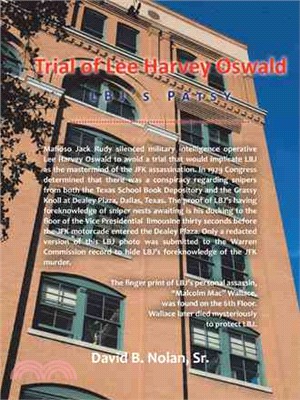
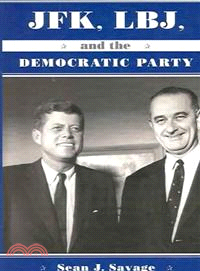
LBJ aims to expose Vice President Johnson’s active role in the assassination of President Kennedy and how he began planning his takeover of the U.S. presidency even before being named the vice preside
A distinguished historian of twentieth-century America, Woods offers a wholesale reappraisal and sweeping, authoritative account of the life of one of the most fascinating and complex U.S. presidents.
Kenneth O'Donnell was JFK's Chief of Staff, among the group known as Kennedy's “Irish Mafia.” O’Donnell was with Jack Kennedy through his entire time in office… and he was on Air Force One in Dallas,
Reveals how presidents deploy a rhetoric that attempts to attract many racial and ethnic groups, but ultimately directs itself to an archtypal white, Middle-American swing voter.
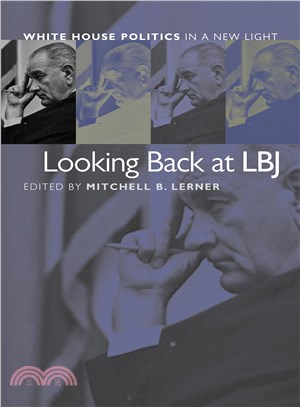
When former president Lyndon B. Johnson opened the LBJ Presidential Library in May 1971, he proclaimed, “It’s all here, the story of our time—with the bark off.” Accordingly, he wanted his library to
A White House correspondent and Washington reporter during the Kennedy and Johnson years combines lively anecdotes with serious analyses to answer key questions and arrive at new conclusions about the
In politics, the man who takes the highest spot after a landslide is not standing on solid ground.In this riveting work of narrative nonfiction, Jonathan Darman tells the story of two giants of Americ
As a young White House correspondent during the Kennedy and Johnson years in Washington, D.C., Godfrey Hodgson had a ringside seat covering the last two great presidents of the United States, John F.
President Lyndon B. Johnson played a monumental role in America’s quest for civil rights. The legacy of those efforts reached a crescendo from April 8 through 10, 2014, as the LBJ Presidential Library
Phillip F. Nelson’s new book begins where LBJ: The Mastermind of the JFK Assassination left off. Now president, Johnson begins to push Congress to enact long-dormant legislation that he had previously
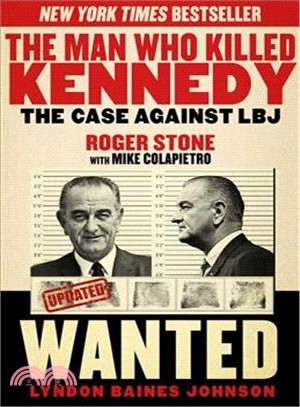
The political consultant, strategist and lobbyist who made public Eliot Spitzer's infractions and brought his term to an end reveals why he believes President Johnson used personal contacts from both
LBJ and Grassroots Federalism: Congressman Bob Poage, Race, and Change in Texas reveals the local ramifications of federal policy. Three case studies in the rising career of Lyndon B. Johnson show thi
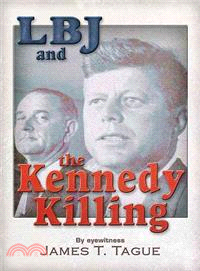
The author James Tague was an eyewitness to the assassination of President Kennedy, his Warren Commission testimony changed history and he is now recognized as a top researcher on the murder of JFK.Th
Perhaps the most anonymous members of a political campaign are the advance men, the people who prepare the way for campaign stops and political visits. A former advance man for John F. Kennedy and Lyn
The "deadly bet" that Lyndon Johnson made and lost was that he could engage in a protracted overseas war and still accomplish his domestic agenda. In this analysis of the fallout of that bet, LaFeber
Walter LaFeber explores the turbulent elcetion of 1968 and its significance in the larger context of American history. Clear, concise, and engaging, this work sheds important light on this crucial yea
As he worked to build his Great Society, Lyndon Johnson often harkened back to his teaching days in the segregated "Mexican" school at Cotulla, Texas. Recalling the poverty and preju
Decades later, the Vietnam War remains a divisive memory for American society. Partisans on all sides still debate why the war was fought, how it could have been better fought, and whether it could ha
Exploring the influence of personality upon politics, Mr. Wicker explains why John F. Kennedy, the popular president, failed to push his legislative program through Congress, and why Lyndon Johnson, t
"1960 aims to take us deeper into the campaign than Theodore White's famous The Making of the President, 1960. And it does." —Chicago Sun-TimesAward-winning historian David Pietrusza's hard-edged acco
The Warren Court of the 1950s and 1960s was the most liberal in American history. Yet within a few short years, new appointments redirected the Court in a more conservative direction, a trend that con
The politics of the 1950s revolved around two primary leaders, one Republican and one Democrat?both moderate, and both willing to compromise to move the nation forward.The Republican leader was Presid
In Freedom is Not Enough, award-winning historian James Patterson narrates the birth, life, and afterlife of the explosive Moynihan report, which altered the way we view race in America. In 1965, Pre
Thoroughly analyzes the controversial "Daisy Girl" ad run by Lyndon B. Johnson's presidential campaign in 1964, which painted Barry Goldwater as a radical who would lead the United States into nuclear