Few philosophers held greater fascination for Jacques Derrida than Martin Heidegger, and in this book we get an extended look at Derrida's first real encounters with him. Delivered over nine sessions
Using the philosophy of Jean-Luc Nancy as an anchoring point, Jacques Derrida in this book conducts a profound review of the philosophy of the sense of touch, from Plato and Aristotle to Jean-Luc Nanc
Rogues, published in France under the title Voyous, comprises two major lectures that Derrida delivered in 2002 investigating the foundations of the sovereignty of the nation-state. The term "Etat vo
In the 1970s, sections of the French government, particularly the Ministry of Education under RenT Haby, set out to limit the teaching of philosophy in French schools. Philosopher Derrida (one of the
Following on from The Beast and the Sovereign, Volume I, this book extends Jacques Derrida’s exploration of the connections between animality and sovereignty. In this second year of the seminar, orig
Prodigiously influential, Jacques Derrida gave rise to a comprehensive rethinking of the basic concepts and categories of Western philosophy in the latter part of the twentieth century, with writings
A 'wilful extremist' according to the London Times, Helene Cixous is hailed as one of the most formidable writers and thinkers of our time. Acclaimed by luminaries such as Jacques Derrida, her writing
Jacques Derrida (1930-2004) was Professor of Philosophy at l'Ecole Normale Superieure, Paris. Regarded as the founding father of Deconstruction, his influence on contemporary thought has been enormous
Nietzsche has recently enjoyed much scrutiny from the nouveaux critiques. Jacques Derrida, the leader of that movement, here combines in his strikingly original and incisive fashion questions of sexua
Originally published in 1995, Advances was first written by Jacques Derrida as a long foreword to a book by one of his most promising former students, the philosopher Serge Margel’s Le Tombeau d
The Gift of Death, Jacques Derrida’s most sustained consideration of religion, explores questions first introduced in his book Given Time about the limits of the rational and responsible that on
In Archive Fever, Jacques Derrida deftly guides us through an extended meditation on remembrance, religion, time, and technology—fruitfully occasioned by a deconstructive analysis of the notion
First published in 1967, Writing and Difference, a collection of Jacques Derrida's essays written between 1959 and 1966, has become a landmark of contemporary French thought. In it we find Derrida at
Nietzsche has recently enjoyed much scrutiny from the nouveaux critiques. Jacques Derrida, the leader of that movement, here combines in his strikingly original and incisive fashion questions of sexua
"The English version of Dissemination [is] an able translation by Barbara Johnson . . . . Derrida's central contention is that language is haunted by dispersal, absence, loss, the risk of unmeaning, a
Is giving possible? Is it possible to give without immediately entering into a circle of exchange that turns the gift into a debt to be returned? This question leads Jacques Derrida to make out an irr
“More than fifteen years ago,” Jacques Derrida writes in the prologue to this remarkable and uniquely revealing book, “a phrase came to me, as though in spite of me. . . . It imposed itself upon me wi
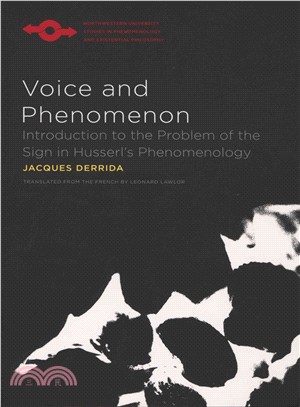
Published in 1967, when Derrida is 37 years old, Voice and Phenomenon appears at the same moment as Of Grammatology and Writing and Difference. All three books announce the new philosophical project c
This new book reflects Derrida's latest views on the role of education and international organizations in an era of globalization. In this book, Derrida develops a notion of the global citizen that is
This book brings together for the first time five recent essays by Jacques Derrida, which advance his reflections on many issues: lying, perjury, forgiveness, confession, the profession of faith, and,
“ I have but one language—yet that language is not mine.” This book intertwines theoretical reflection with historical and cultural particularity to enunciate, then analyze this conundrum in terms of the distinguished author’s own relationship to the French language. Its argument touches on several issues relevant to the current debates on multiculturalism.
"The name: What does one call thus? What does one understand under the name of name? And what occurs when one gies a name? What does one give then? One does not offer a thing, one delivers nothing, an
Derrida's new book bears a special significance because it focuses on an issue that has informed the whole of his work up to the present. One of the aporetic experiences touched upon is that "my deat
"I shall speak of ghost, of flame, and of ashes." These are the first words of Jacques Derrida's lecture on Heidegger. It is again a question of Nazism—of what remains to be thought through of N
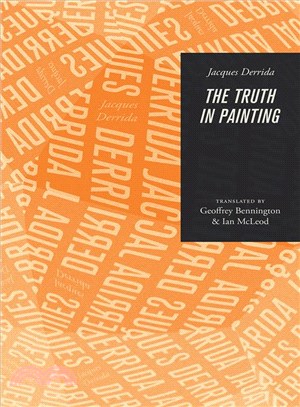
"The four essays in this volume constitute Derrida's most explicit and sustained reflection on the art work as pictorial artifact, a reflection partly by way of philosophical aesthetics (Kant, Heidegg
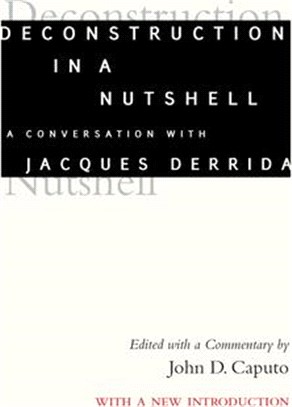
Jacques Derrida is, in the words of the New York Times, "perhaps the world's most famous philosopher—if not the only famous philosopher." He often provokes controversy as soon as his name is men
Prominent European philosopher Jacques Derrida is interviewed by his colleague Roudinesco (Ecole Pratique des Hautes Etudes, France) in a wide-ranging discussion touching upon some of the most content
"The four essays in this volume constitute Derrida's most explicit and sustained reflection on the art work as pictorial artifact, a reflection partly by way of philosophical aesthetics (Kant, Heidegg
This volume collects twenty-three interviews given over the course of the last two decades by Jacques Derrida. It illustrates the extraordinary breadth of his concerns, touching upon such subjects as
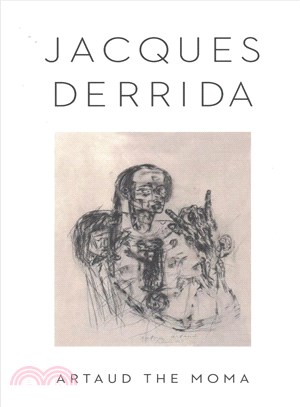
In 1996 Jacques Derrida gave a lecture at the Museum of Modern Art in New York on the occasion of Antonin Artaud: Works on Paper, one of the first major international exhibitions to present the avant-