In John Updike’s second collection of assorted prose he comes into his own as a book reviewer; most of the pieces picked up here were first published in The New Yorker in the 1960s and early ’70s. If
*注意:此書為POD (Print on Demond)少量印製。 Using details from the ancient Scandinavian legends that were the inspiration for "Hamlet", this tale brings to life Gertrude's girlhood as the daughter of King Rorik
When historian Alfred “Alf” Clayton is invited by an academic journal to record his impressions of the Gerald R. Ford Administration (1974–77), he recalls not the political events of the time but rath
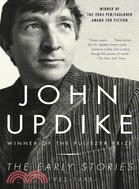
The Library of America presents the first of two volumes in its definitive Updike collection. Here are 102 classic stories that chart Updike’s emergence as America’s foremost practitioner of the shor
After beginning with early American portraits, landscapes, and the transatlantic career of John Singleton Copley, Still Looking then considers the curious case of Martin Johnson Heade and extols two
"The fiftieth anniversary edition of John Updike's collection of semi-autobiographical stories about a small Pennsylania town, first published in paperback in 1964 and now in hardcover for the first t
In an interview, Updike once said, "If I had to give anybody one book of me, it would be the Olinger Stories." This title follows the life of one character from the age of ten through manhood, in the
WINNER OF THE NATIONAL BOOK CRITICS CIRCLE AWARD “Writing criticism is to writing fiction and poetry as hugging the shore is to sailing in the open sea,” writes John Updike in his Foreword to this c
On September 28, 1960-a day that will live forever in the hearts of fans-Red Sox slugger Ted Williams stepped up to the plate for his last at-bat in Fenway Park. Seizing the occasion, he belted a sol
In 1956, Updike published a story, "Snowing in Greenwich Village," about a young couple, Joan and Richard Maple, at the beginning of their marriage. Over the next two decades, he returned to these ch
*注意:此書為POD (Print on Demond)少量印製。 In a small Pennsylvania town in the late 1940s, schoolteacher George Caldwell yearns to find some meaning in his life. Alone with his teenage son for three days in a
John Updike's twenty-first novel, a bildungsroman, follows its hero, Owen Mackenzie, from his birth in the semi-rural Pennsylvania town of Willow to his retirement in the rather geriatric community o
Winner of the PEN/Faulkner Award for Fiction ? A harvest and not a winnowing, this volume collects 103 stories, almost all of the short fiction that John Updike wrote between 1953 and 1975. “How rarel
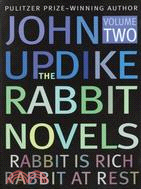
The third and fourth novel in John Updike’s acclaimed quartet of Rabbit books–now in one marvelous volume. RABBIT IS RICHWinner of the American Book Award andthe National Book Critics Circle Award“
John Updike’s twentieth novel, like his first, The Poorhouse Fair, takes place in one day, a day that contains much conversation and some rain. The seventy-nine-year-old painter Hope Chafetz, who in t
The Jewish American novelist Henry Bech—procrastinating, libidinous, and tart-tongued, his reputation growing while his powers decline—made his first appearance in 1965, in John Updike’s “The Bulgaria
In this follow-up to Bech: A Book, Henry Bech, the priapic, peripatetic, and unproductive Jewish American novelist, returns with seven more chapters from his mock-heroic life. He turns fifty in a conf
*注意:此書為POD (Print on Demond)少量印製,需達到一定的數量書商才會著手印製。 One hot afternoon in 1910, the Reverend Clarence Wilmot, standing in the rectory of the Fourth Presbyterian Church, experiences the
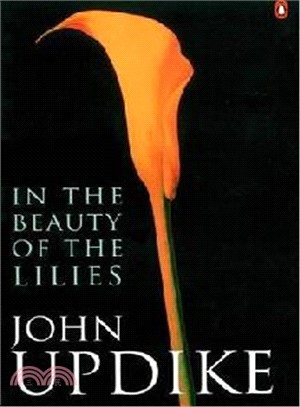
In the Beauty of the Lilies begins in 1910 and traces God’s relation to four generations of American seekers, beginning with Clarence Wilmot, a clergyman in Paterson, New Jersey. He loses his faith bu
Sarah Worth, alias S., leaves her New England home and family to join a Hindu religious commune in Arizona where she falls in love with the spiritual leader, Arhat
In the dream-Brazil of John Updike’s imagining, almost anything is possible if you are young and in love. When Tristao Raposo, a black nineteen-year-old from the Rio slums, and Isabel Leme, an eightee
When this classic collection of stories first appeared—in 1962, on the author’s thirtieth birthday—Arthur Mizener wrote in The New York Times Book Review: “Updike is a romantic [and] like all American
In this antic riff on Hawthorne’s Scarlet Letter, the Reverend Tom Marshfield, a latter-day Arthur Dimmesdale, is sent west from his Midwestern parish in sexual disgrace. At a desert retreat dedicated
When we first met him in Rabbit, Run (1960), the book that established John Updike as a major novelist, Harry (Rabbit) Angstrom is playing basketball with some boys in an alley in Pennsylvania during
Trista+a1o, an African-Brazilian street kid, and Isabel, an upper-class teen fresh from convent school, fall in love and flee from her rich father and the toughs he has sent in pursuit of them. Simult
In a world where directional signs are unreadable, men and women on the move deal with such problems as marriage, divorce, prostitution, leprosy, extinct mammals, guilt, and getting in and out of Ethi
In this antic riff on Hawthorne’s Scarlet Letter, the Reverend Tom Marshfield, a latter-day Arthur Dimmesdale, is sent west from his Midwestern parish in sexual disgrace. At a desert retreat dedicated
Nothing in his previous life could have prepared Colonel Hakim Felix Ellellou for his new role as the President of Kush. Neither the French army nor his American university provided a grounding in the
Gathering together almost all the short fiction that John Updike published between 1953 and 1975, this collection opens with Updike's autobiographical stories about a young boy growing up during the D
Deals with one of America's issues - threat of Islamist terror from within. It also suggests ways in which we can counter it, in our words and our actions.
In 1969, the times are changing in America. Things just aren't as simple as they used to be for Rabbit Angstrom. His wife leaves him, and suddenly, into his confused life comes Jill, a runaway who bec
The Library of America presents the second of two volumes in its definitive Updike collection. Here are 84 classic stories that display the virtuosic command of character, dialogue, and sensual descri
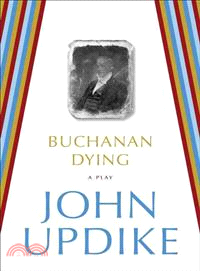
To the list of John Updike’s well-intentioned protagonists—Rabbit Angstrom, Richard Maple, Henry Bech—add James Buchanan, the harried fifteenth president of the United States (1857–1861). In what the
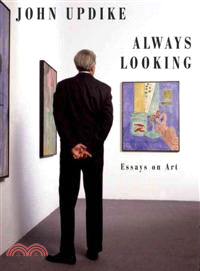
In this posthumous collection of John Updike’s art writings, a companion volume to the acclaimed Just Looking (1989) and Still Looking (2005), readers are again treated to “remarkably elegant essays”
John Updike’s first collection of nonfiction pieces, published in 1965 when the author was thirty-three, is a diverting and illuminating gambol through midcentury America and the writer’s youth. It op
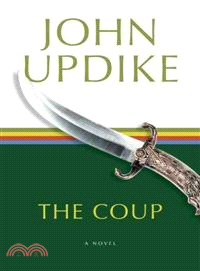
The Coup describes violent events in the imaginary African nation of Kush, a large, landlocked, drought-ridden, sub-Saharan country led by Colonel Hakim Felix Ellellou. (“A leader,” writes Colonel Ell
"A haunting collection of heart-wrenching narratives...The evocative nature of the stories in My Father's Tears echoes the melancholy of Chekhov, the romanticism of Wordsworth and the mournful spirit
John Updike’s first collection of new short fiction since the year 2000, My Father’s Tears finds the author in a valedictory mood as he mingles narratives of his native Pennsylvania with stories of Ne
More than three decades after the events described in The Witches of Eastwick, Alexandra, Jane, and Sukie—widowed, aging, and with their occult powers fading—return for the summer to the Rhode Island
More than three decades have passed since the events described in John Updike's The Witches of Eastwick. The three divorcees - Alexandra, Jane, and Sukie - have left town, remarried, and become widow