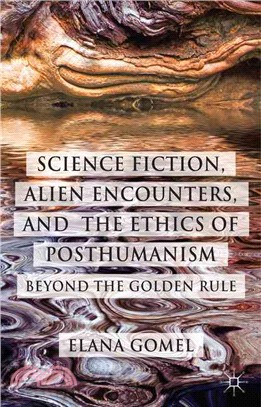
What are the implications for Humankind of alien civilizations that may be "out there?" In thinking about contact with extraterrestrials, we have to grapple with a host of philosophical, religious, a
Light of the Stars tells the story of humanity’s coming of age as we awaken to the possibilities of life on other worlds and their sudden relevance to our fate on Earth. Astrophysicist Adam Frank trac
Approximately 8,000 Canadian civilians were imprisoned during the First World War because of their ethnic ties to Germany, Austria-Hungary, and other enemy nations. Although not as well-known as the l
In the second century, Platonist and Judeo-Christian thought were sufficiently friendly that a Greek philosopher could declare, "What is Plato but Moses speaking Greek?" Four hundred years later, a Ch
This book explains how migrants can be viewed as racial others, not just because they are nonwhite, but because they are racially "alien." This way of seeing makes it possible to distinguish migrants
In The South's Tolerable Alien, Andrew S. Moore probes the role of Catholics in the post--World War II South and argues persuasively that, until the 1960s, religion rivaled race as a boundary separati
This book brings together two important cultural trends: alien encounters and posthumanism. By considering scenarios of encounters with intelligent aliens in literary science fiction, Science Fiction,
"A revised, expanded, and updated second version to the successful Biological Invasions: Economic and Environmental Costs of Alien Plant, Animal, and Microbe Species, this reference discusses how non-
Between the early 1900s and the late 1950s, the attitudes of white Californians toward their Asian American neighbors evolved from outright hostility to relative acceptance. Charlotte Brooks examines