Distinguished philosopher Hilary Putnam, who is also a practicing Jew, questions the thought of three major Jewish philosophers of the twentieth century - Franz Rosenzweig, Martin Buber, and Emmanuel
Jewish social philosopher Buber (1878-1965) wrote Zwei Glaubensweisen in Jerusalem during its siege in the late 1940s. One of the types of faith he identifies regards trusting someone, and the other
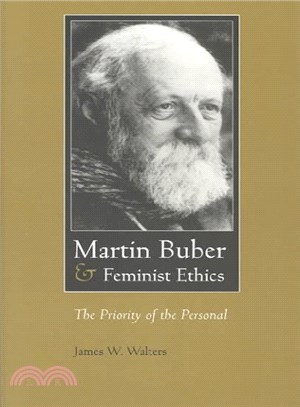
In exploring the relevance of Buber's 19th century relational philosophy to postmodern feminist care ethics like those of Nel Noddings, Walthers (religion, Loma Linda U.) discusses influences on the H
In this handsomely-bound volume, Rahimieh (comparative literature, U. of Alberta, Canada) presents selected narratives written by Persians from the 16th century to modern times. Each of the five chapt
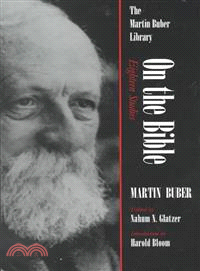
Collects into one volume Jewish philosopher Buber's (1878-1965) insights into the Bible, with essays from Israel and the World (1948), The Prophetic Faith (1949), and Moses (1958) along with one
Originally published as Israel and Palestine , 1952, this is a reprint of the 1973 edition which is cited in BCL3 . Annotation c. by Book News, Inc., Portland, Or.
Collects some 700 letters written by translator and theologian Martin Buber and such correspondents as Albert Camus, Herman Hesse, Franz Kafka, Franz Rosenzweig, and Bertrand Russell. First published
Available for the first time in paperback, Ecstatic Confessions is Martin Buber's unique, personal gathering of the testimonies of mystics throughout the centuries expressing their encounters with th
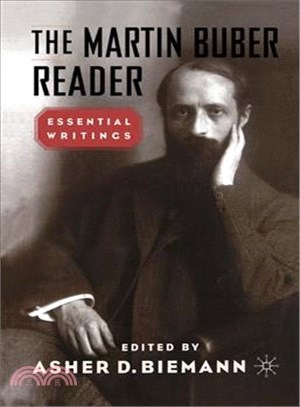
There is no adequate understanding of contemporary Jewish and Christian theology without reference to Martin Buber. Buber wrote numerous books during his lifetime (1878-1965) and is best known for I
The first major biography in English in over thirty years of the seminal modern Jewish thinker Martin Buber An authority on the twentieth-century philosopher Martin Buber (1878–1965), Paul Mende
Jewish-Israeli philosopher Martin Buber (1878-1965) is best known for his concept of dialogical existence, described in I and Thou. Drawing on his readings of Buber, personal letters and visits, the l
The thought paths of major German-Jewish philosophers Martin Buber (1878-1965), who immigrated to Jerusalem, and Abraham Joshua Heschel (1907-1972), who immigrated to the U.S., had many intersections
The specific focus of Martin Buber and the Human Sciences is "dialogue" as the foundation of and integrating factor in the human sciences, using dialogue in the special sense which Buber has made famo
Theologian, philosopher, and political radical, Martin Buber (1878–1965) was actively committed to a fundamental economic and political reconstruction of society as well as the pursuit of internationa
Rosensweig (1886-1929), who collaborated with Martin Buber on a new German translation of the Bible, wrote "The New Thinking" as a supplementary guide to The Star of Redemption (1921). Udoff (philos
Buber poetically interprets the central aspects of Hasidic life, offers a selection of sayings from Baal-Shem-Tov, and movingly recounts his personal path to Hasidism.
ON BUBER, like other titles in the Wadsworth Philosopher's Series, offers a concise, yet comprehensive, introduction to this philosopher's most important ideas. Presenting the most important insig
Buber scholars have long agreed that in this study of the political-communal image of kingship rich, imaginative historical scholarship combines with brilliant insight and style to make this work an o
Martin Buber was one of the most significant religious thinkers of the twentieth century. In this short and remarkable book he presents the essential teachings of Hasidism, the mystical Jewish movemen
The Jewish philosopher Martin Buber spoke directly to the most profound human concerns in all his works, including his discussions of Hasidism, a mystical-religious movement founded in Eastern Europe
In this book Buber completed his lifework of recreating and interpreting Hasidism. Here he makes explicit the place of Hasidism among world religions, contrasting it with biblical prophecy, Spinoza, F