If you're searching for practical answers to the challenge of inquiry while meeting the demands of covering the curriculum, look no further than "A Mathematical Passage."In this book, classroom teache
A Chinese immigrant herself and the parent of an immigrant student, Fu (literacy and learning, U. of Florida) describes her five-year collaborative experience in a school change project at a New York
Detailing techniques for conducting research in the classroom, this textbook describes interviewing, note-taking, the categorization of data, and other skills in the context of research strategies. Hu
Weiss explores the dynamic relation of specific local, regional, and global understandings of value as manifested in the coffee of rural Haya communities. His investigation offers critical insight int
In Knee to Knee, Eye to Eye Cole addresses text, organization, management, assessment, and the tremendous amount of learning that occurs through the powerful, engaging combination of books and talk.
McCall (curriculum and instruction, U. of Wisconsin, Oshkosh) has 28 years of teaching experience, at the elementary and university levels. Ristow has 30-plus years of experience as an elementary sch
Offering inspiration for student writers, Schuster's nontraditional text divides grammar's rules into bedrock basics and breakable myths commonly taught in English classes but ignored by many of the b
What kind of supports would keep teachers well equipped to help all of their students succeed? What if these same supports kept teachers energized, passionate, and informed about their fields? Content
Presents a series of propositions set forth by the National Board for Professional Teaching, including issues of commitment to teaching, knowledge of subjects taught, and responsibility for monitoring
An invaluable resource on the results of Krashen's many years of research and application, this book covers a wide range of topics: from the role of the input/comprehension hypothesis, the still-very
In Children's Mathematics: Cognitively Guided Instruction, Thomas Carpenter, Megan Franke, and Linda Levi helped hundreds of thousands of teachers understand children's intuitive problem-solving and c
This text features 25 of Goodman's most important writings originally published between 1965 and 1994 in journals or as chapters of books, which would be difficult for readers to access today. The es
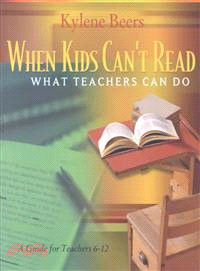
For Kylene Beers, the question of what to do when kids can't read surfaced abruptly in 1979 when she began teaching. That year, she discovered that some of the students in her seventh-grade language a
Suggests activities for preschool and kindergarten classes that allow children to explore their bodies, feelings, relationships, and perceptions of other people. The ideas are divided into sections f
Routman (a language arts coach in the US) has created a useful guide full of techniques and examples for teaching reading at the pre-college level. Crediting the origins of her teaching philosophy to
In this practical, hands-on guidebook, JoAnne Schudt Caldwell and Michael P. Ford describe a variety of grouping patterns and ways to implement them throughout the elementary grades.
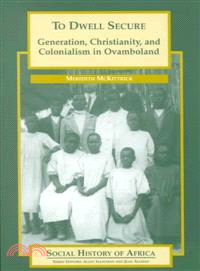
Based on over five years of research in Nambia, Finland, and Germany, McKittrick's book is a tour de force demonstration of African social history at its best.
Focusing on the role and impact of commercialism, market logic, and privatization in the school system, these sixteen papers demonstrate the extent to which corporate power has already penetrated educ
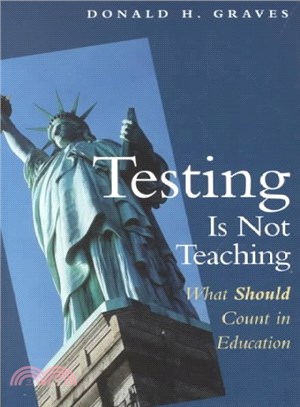
In the rush to implement high-stakes testing, narrow standards, and top-down management of public education, the interests of two key stakeholders have been ignored: students and teachers. Not anymore
Arguing that the new educational reform plans in the United States are simply recycled bad ideas, Allington (education, U. of Florida) presents 13 contributions that argue that the federal reform plan
In this important book Tom Newkirk takes an up-close look at elementary boys and their relationship to sports, movies, video games, and other venues of popular culture.
Schmidt (Director of Pupil Services, Santa Monica-Malibu School District) offers advice on the day-to-day reality of acting as a school principal. From navigating the politics of the school system to
Dozens of graphic organizers and a hundred ways to use them! Jims prepared a workbook thats a real workhorse, providing tools to spark student thinking that are both intriguing and preciseand applica
Teachers in need of new ideas will find this compact book a big help in early childhood phonics. It offers a collection of word study activities for the progressive classroom using the omnipresent to
History is notorious for its regimented and unimaginative prose, says Kashatus (history, West Chester U. of Pennsylvania). He suggests how teachers of US history can challenge themselves and their stu
In "applied learning" projects, children select an area of interest and work collaboratively to research the topic. Diffily (early childhood education, Southern Methodist U.) and Sassman (an elementar
In 1978, Yetta Goodman (education, U. of Arizona) coined the term "kidwatching" to describe how teachers observe and record children's literary development. In this guide for preschool, kindergarten,
Confessional literature is a particularly appropriate mode of literary discourse for a society struggling to carve out a new national identity based not on race, but on a shared sense of geographic sp
Howard Gardners theory of multiple intelligences suggests that culture, language, and environment all influence how an individuals intelligence is expressed.
Caribbean literature is usually conceptualized in regional, thematic, and post-independence ideological terms. But in addition to Caribbean literature written in English, there is a large body of earl
Weaver incorporates especially timely informationaccurate data, informed critique, and results of often-ignored researchto help teachers counteract government and corporate intrusion into classrooms.
In this third volume in a series of three, Fosnot and Dolk focus on how children in grades 58 construct their knowledge of fractions, decimals, and percents.
Avery (an education consultant and former elementary school teacher) covers the basics of early literacy training, including the classroom climate, the writing process, the reading process, children's
Easton (professional development, Eagle Rock School and Professional Development Center, Colorado) provides a detailed description of an alternative approach to curriculum, teaching, learning and orga
Peterson, an elementary teacher-librarian, helps teachers and librarians understand what makes a text easy or challenging for a new reader, integrating discussion of some 200 children's books. She tel
Twenty essays consider the definition and teaching of literacy, as well as what is taught, who is considered literate, and the potential of literacy education. Particular attention is given to the re
Demonstrating how children's interests and questions become the central focus of the curriculum, the author offers dozens of easy-to-use techniques for organizing the classroom and the school day to