This work takes a critical look at India in the 1950s, a momentous decade in its contemporary history. It looks at the colossal challenges which India faced in its years after Independence and conveys
This book presents in a concise format a simplified and coherent geological-dynamical history of the Indian subcontinent (including Sri Lanka, Bangladesh, Myanmar, Southern Tibet and Pakistan).Encompa
Vohra (political science, Trinity College, Hartford) presents a political history of India, focusing on the last 150 years. Divided into three sections, the work reviews India's history up to the 18th
Designed for undergraduate and graduate courses on Indian civilization and history, this text provides a sweeping look at the long and varied history of India and how this complex legacy has shaped, a
Compared to how it looked 150 years ago at the eve of the colonial conquest, today’s India is almost completely unrecognizable. A sovereign nation, with a teeming, industrious population, it is an eco
Conventional wisdom holds that the defeat of the right-wing Hindu nationalist Bharatiya Janata Party in the 2009 election signaled that the middle class had been lured from the idea of India as a Hind
This classic collection by eminent scholars takes a critical look at the mobilizations, genealogies, and interpretive conflicts that have attended efforts to make India Hindu since the rise to power o
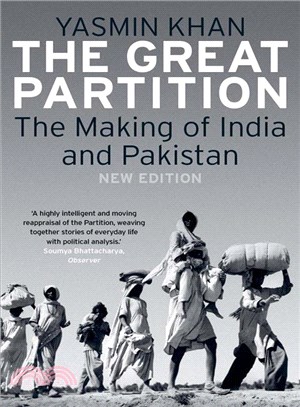
A reappraisal of the tumultuous Partition and how it ignited long-standing animosities between India and Pakistan This new edition of Yasmin Khan's reappraisal of the tumultuous India-Pakistan Partiti
Gandhi’s use of the spinning wheel was one of the most significant unifying elements of the nationalist movement in India. Spinning was seen as an economic and political activity that could bring toge
Gandhi’s use of the spinning wheel was one of the most significant unifying elements of the nationalist movement in India. Spinning was seen as an economic and political activity that could bring toge
The Partition of India in 1947 promised its people both political and religious freedom?through the liberation of India from British rule, and the creation of the Muslim state of Pakistan. Instead, th
The Partition of India in 1947 promised its people both political and religious freedom?through the liberation of India from British rule, and the creation of the Muslim state of Pakistan. Instead, th
The Indus Waters Treaty is considered a key example of India-Pakistan cooperation, but less has been said about its critical influence on state-making in both countries. Rivers Divided reveals the imp
This exciting book moves beyond and against the current postcolonial orthodoxy. Instead of arguing that all colonization is wrong and inherently unjust, Dr. Kartar Lalvani argues that Britain made a c
In this era of unceasing industrialization, rising air and water pollution levels, and rapidly depleting natural resources, the earth's natural environment has inevitably become the ultimate casualty.
Cultural anthropologist Dewey explores the Miss India beauty pageant as a window into issues of beauty, power, and class in India. Her key themes are the power of the gaze, gender, and globalization.
Post-liberalisation India has witnessed a dramatic growth of the television industry as well as on-screen images of the glitz and glamour of a vibrant, ‘shining’ India. Through a detailed ethnographic