商品簡介
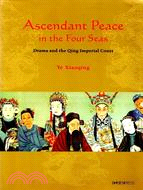
On an autumn morning in 1793, Lord Macartney waited to be ushered into the imperial summer retreat to take part in the celebration of the Qianlong Emperor's 82nd birthday. It was a long day; the celebration drama, Ascendant Peace in the Four Seas, lasted five hours. There were many scenes of fish, turtles and other sea creatures, and Macartney guessed it must have had something to do with the marriage between the ocean and land. He could not have been more wrong…".
For the Qing court, entertaining foreign visitors was only one of the numerous ritual and political purposes dramas served. Delving into a rich collection of first-hand materials, the author meticulously excavates and combs historical data including court records, eunuchs' memoirs, pictorial archives of opera costumes, and period news. She investigates the development of imperial drama and its influence on the Peking Opera, as well as the function and system of imperial organizations responsible for drama. Also discussed are the complex roles of the actors on and off stage, and the broader issues of cultural and political control intertwined with the performances themselves. The book thus presents us not only an art history of Peking Opera, but also a vivid scroll-painting of the social-cultural life both in and beyond the Forbidden City.
作者簡介
Dr. Ye Xiaoqing (1952-2010) was Senior Lecturer in Chinese Studies,Macquarie University in Sydney. She has written extensively on Chinese intellectual history and China's urbanization process in early 19th century.Her published titles include The Dianshizhai Pictorial: Shanghai Urban Life 1884-1898 and Xixue shuru yu jindai chendshi 西學輸入與近代城市 (The Introduction of Western Thought and the Development of the Modern City).
名人推薦
This stunningly successful and beautifully written book deserves a wide readership. It is essentially about the role of the imperial court and the Chinese elite classes in the development of Peking Opera. More than entertainment, this was a cultural form that was a participant in social change. The book thus has much to say on social history, including the status of actors, the role of eunuchs, and the way the court interrelated with the rest of society. I recommend this book to scholars, specialists, and the general reader. A remarkable tour de force, it contributes greatly to our knowledge and understanding of Chinese theatre, culture, society, and history. ──Prof. Colin Mackerras, Griffith University,
Ascendant Peaces in the Four Seas is an exceptional monograph on both court culture and Chinese opera art in the Qing dynasty. Drawing from a rich collection of first-hand materials, especially original court records, the late Dr. Ye Xiaoqing meticulously presents readers with various illustrative case studies and delineates the nexus between the court and the development of Chinese opera. With extensive details unfolded in each chapter, this book is of great value for historical scholars specializing in Qing politics, opera art and social culture. In the meantime, the book’s fascinating story-telling techniques and smooth writing style also offers the general public a pleasant read. ──Prof. Xu Jilin, East China Normal University, Using court archives and literati writings of the Qing dynasty, the late Dr. Ye Xiaoqing reconstructs with great detail and finesse the institutional, ritual, and social history of what we now call the Peking Opera. Dr. Ye also traces the fascinating development of this unique imperial art into its popular form in society. This book is a must for all those interested in Peking Opera and in the cultural policy of the Qing state. ──Prof. Angela Ki Che Leung, University of Hong Kong,